— As our Caribbean diaspora observes Black History Month, examination of the 1781 Zong massacre offers a stark lens into the Atlantic world that shaped our histories. What began as a slave ship voyage entered the British record not as a murder trial, but as an insurance dispute. By examining the ship, the maritime law that governed it, and the artistic and scholarly interpretations that followed, we begin to understand how slavery was embedded within the legal and financial structures of the 18th century, and why that history continues to resonate across our diaspora today.
•••
By Romeo Kaseram
An LJI Community Feature
For our Caribbean diaspora here in Canada and beyond, Black History Month is a time of celebration through music, migration, memory, and survival. Yet the story of our Caribbean homelands is also a maritime story shaped not only on plantations and in villages, but on the open Atlantic, in the holds of ships that link together Europe, West Africa, and the region in a vast and violent commercial network. To understand our diaspora is to better understand the sea that carried its beginnings.
In November 1781, a small British slave ship named the Zong crossed that Atlantic on its way to Jamaica. Like hundreds of vessels engaged in the 18th-century slave trade, it carried more than 400 enslaved Africans taken from the West African coast and bound for sale in the Caribbean.
To investors in the slave trade in Liverpool, the Zong’s voyage represented capital and calculated risk. To the slaves confined below deck, it represented confinement, terror, and an uncertain horizon.
What unfolded aboard the Zong would become one of the most chilling and brutal episodes in the history of the Atlantic slave trade. Yet the event did not first enter public record as a criminal prosecution.
Instead, it emerged in 1783 as an insurance dispute; a courtroom argument over whether shipowners could claim compensation for the loss of what maritime law classified as “cargo”. Thus, in the language of the ledger, human beings became units of financial loss.
The Zong was originally a Dutch vessel named Zorg, later captured and repurposed into British service. By 1781 it operated within the established triangular trade linking Liverpool, West Africa, and the Caribbean.
Liverpool merchants financed voyages through complex partnerships that distributed risk among investors. Enslaved Africans were insured as cargo; losses were calculated before departure.
The ship was relatively small, yet it departed the African coast carrying more than 400 captives. It was dangerously overcrowded, even by the brutal standards of the trade. Overcrowding reflected speculative logic: greater numbers promised greater profit, assuming enough of the captured human beings survived.
Captain Luke Collingwood, reportedly on his first command, and later said to have fallen ill during the voyage, presided over a troubled journey. The ship missed Jamaica due to a navigational error, and remained at sea longer than intended. Disease spread, supplies diminished. Mortality was already present before the decision was made that would mark the voyage for its singularity out of thousands of brutal trans-Atlantic voyages.
The Zong sailed not only under the British flag, but under British insurance contracts. Eighteenth-century maritime commerce depended on insurance. Under the doctrine of “general average”, if part of a ship’s cargo was deliberately sacrificed to save the vessel in an emergency, the loss could be shared among stakeholders and reimbursed.
If enslaved Africans died of illness, then owners bore the loss; but if they were thrown overboard under what was deemed necessity, then compensation could be claimed.
Within this legal framework, human beings were transformed into insurable property. The language of “loss”, “necessity”, and “value” created a vocabulary through which onboard, temporal decisions could be framed as financial, rather than moral acts.
The doctrine of “general average” did not create cruelty; instead, it provided a structure in which cruelty could be rationalised, documented, litigated, and treated as a compensable loss.
According to affidavits presented in the 1783 case Gregson v Gilbert, on November 29, 1781, members of the crew began throwing enslaved Africans overboard. Fifty-four women and children were reportedly cast into the sea that day.
In the following days, additional captives, among them 42 men, were thrown overboard. The total number deliberately killed is commonly recorded as approximately 130, though it is suspected that even more live captives were tossed into the sea.
The officers claimed necessity, citing a water shortage, and the need to preserve the vessel from the likelihood of a rebellion by the captives over diminishing water and food ration.
Yet evidence presented later revealed rainfall had restored water reserves, which raised questions about the severity of the shortage. And the surviving record contains no ship’s log detailing the decision-making and its makers. In fact, the ship’s log went missing shortly after arrival in Jamaica, a significant “silence”, if not erasure, in the historical record of the massacre.
What we know is largely made available from the litigation. When the Zong reached Jamaica in December 1781, the voyage had ended, setting into motion a legal dispute that was just the beginning.
In 1783, the case came before Lord Mansfield in Gregson v Gilbert. The legal question was not whether over 130 murders had occurred, but whether the insurers were liable.
The law report records Lord Mansfield observing that “the case of slaves was the same as if horses had been thrown overboard”. It was a comparison that reflected the legal classification of enslaved Africans as property within British insurance law.
So, the courtroom debated liability, and no criminal prosecution followed. In the language of pen strokes etched onto a ledger, the Atlantic became an accounting surface for this etching.
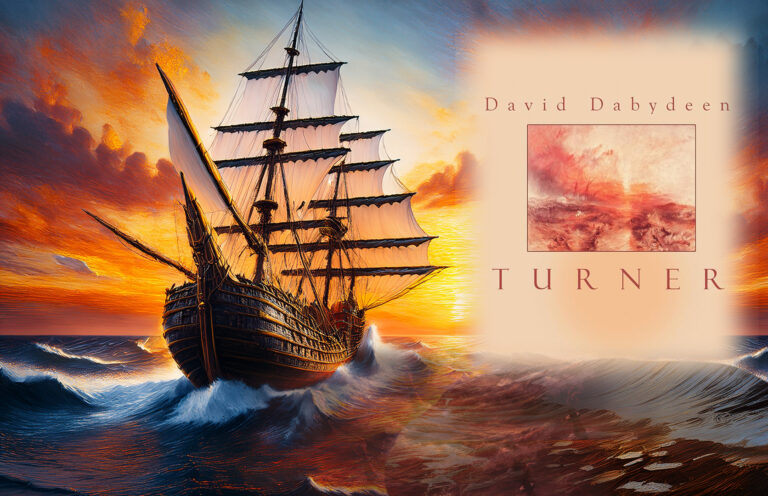
In 1840, British painter J.M.W. Turner exhibited The Slave Ship, a storm-lashed canvas depicting shackled limbs floating on severely turbulent waters. Though not a literal depiction of the Zong massacre, the painting evokes the violence of metonymy, in an enslaved people who are cast into the sea.
Our own Guyanese-born writer David Dabydeen, in his collection Turner: New and Selected Poems (1994), imaginatively gives voice to a figure within that painting, restoring interiority where the archive is silent.
In the collection, Dabydeen responds to Turner’s painting by imaginatively giving voice to an enslaved African figure within the canvas. Where the historical archive is mute and the courtroom abstract, Dabydeen’s poetry restores interiority from memory, fear, and sensation to those who have been submerged in history’s margins.
Meanwhile, Trinidadian-Canadian poet M. NourbeSe Philip published Zong! in 2008, a long-form poetic work constructed entirely from the words of the 1783 legal decision in Gregson v Gilbert.
Refusing to add language of her own, she fractures and rearranges the court’s vocabulary, the very language that reduced human beings to “cargo”, into fragmented lines that evoke drowning, rupture, and silence.
In doing so, she exposes what the legal archive could not contain: grief without record, lives without names, and a history drowned.
Then we have scholarly, academic work such as Ian Baucom’s Specters of the Atlantic: Finance Capital, Slavery, and the Philosophy of History, which situates our disturbing narrative within the rise of modern finance, arguing that the massacre reveals how slavery and emerging capitalism were structurally intertwined.
This scholarly history and theory text examines how the inhumane 1781 massacre became a pivotal moment in the invention of modern finance, and ways we think today about history and value.
It means the Zong was not an aberration; it was not an individualised, isolated moment of inhumanity on board one ship; instead, a convergence point for law, commerce, empire, and a fathomless ocean that was fed human beings.
For our Caribbean diaspora, the event forms part of the Atlantic architecture that shaped our homelands. And so, today, while Black History Month invites celebration, at the same time, it also welcomes clarity. To understand the Zong is to unpack how systems converted the human lives of our ancestors into risk, and risk into monetised, recoverable value.
Remembering the Zong is not about dwelling in horror; instead, it is about understanding the architecture rising up from the foundations to construct our world that has been forged out of suffering, resilience, and survival.
And especially knowledge, which during Black History Month, is a form of reckoning.